RUSSIAN CINEMA IN EXILE
IN THE BALLETS RUSSES ERA
August 10 - 18
National Gallery of Art, Washington
Just as the Ballets Russes brought Russian ballet and theatrical innovations to Europe, film directors, actors, technicians, and designers driven west by the 1917 revolution and its aftermath added an enormous infusion of talent and new ideas to French and German cinema throughout the 1920s. This series explores several of the most notable films made primarily by Russians, who also contributed their skills and creative thinking to numerous mixed productions made together with their European colleagues.
Anna Winestein, Executive Director of the BRCP, advised the NGA's film department in putting together this series, which accompanies the exhibition currently on view, Diaghilev and the Ballets Russes, 1909-1929: When Art Danced With Music. Prints and restorations are from La Cinémathèque française, Paris, and National Film Center, Tokyo.
The lecture and screenings are free of charge and open to the public.
Films
Russians in Napoléon (1927): The Émigré Contribution
Lecture by Anna Winestein,
August 10, 2:00 pm
East Building Auditorium, National Gallery of Art
Russian film professionals, including film directors famous in their own right, actors, a cameraman, numerous technicians and designers, and even the former Ballets Russes participant Alexandre Benois, contributed extensively to Abel Gance’s legendary Napoléon. This lecture explores the creative contribution to that film made by Russian émigrés, as well as some of the parallels between the relationship of the Ballets Russes with European performing arts in the 1920s, and that of the Russian émigré film studio Albatros with European cinema.
Secrets of the Orient ("Scheherazade")
Ciné-Concert, Ben Model in performance. Intoduction by Anna Winestein
August 10, 4:00 pm
East Building Auditorium, National Gallery of Art
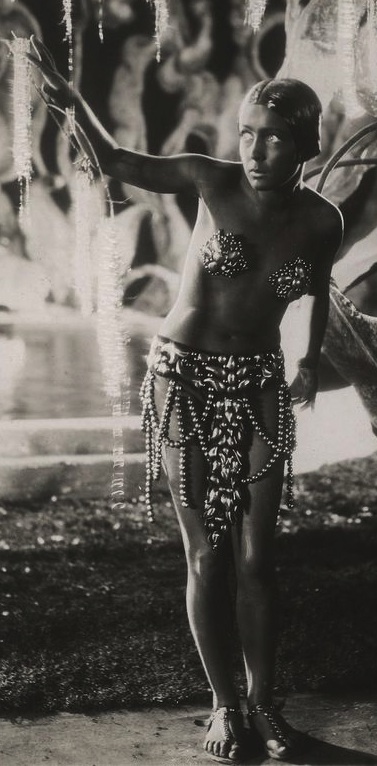
An Orientalist fantasy with boldly exotic sets and costumes by Ivan Lochakoff and Boris Bilinsky, Scheherazade was a French-German coproduction shot in the Berlin studios of Universum Film AG, directed by Russian émigré Alexandre Volkoff, and starring émigré actor Nicolas Koline—a beautiful illustration of the sort of international energy that flowed through late 1920s cinema. Mingling Eastern and Western motifs, the visionary designs (there are even some stencil-colored sequences) display a world of mystery and adventure. Bilinsky’s costumes were directly influenced by Léon Bakst’s Orientalist designs for the Ballets Russes, especially the ballet Scheherazade. (Alexandre Volkoff, 1928, 35 mm, 126 minutes)
Le Lion des Mogols
Ciné-Concert, Ben Model in performance. Intoduction by Anna Winestein
August 11, 4:00 pm
East Building Auditorium, National Gallery of Art
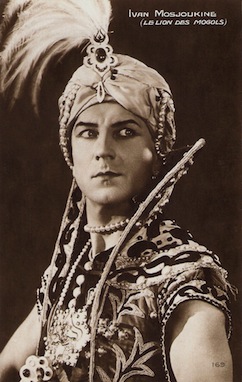
In the high plateaus of Tibet, Prince Roundghito-Sing (Ivan Mosjoukine), romantic rival of the Grand Khan, is forced to flee the kingdom. Heading for Paris by boat, the prince meets a movie team and falls under the spell of Anna, leading lady and lover of the team’s wealthy producer. French avant-garde director Jean Epstein employs his trademark special visual effects (“cinema is an experimental device that builds an image of the universe,” Epstein wrote), against a backdrop of striking sets and costumes by Russians Lochakoff and Bilinsky. (Jean Epstein, 1924, 35 mm, 93 minutes)
Le Brasier ardent
Ciné-Concert, Robert Israel in performance.
August 17, 2:00 pm
East Building Auditorium, National Gallery of Art
In her feverish nightmare, a woman (Nathalie Lissenko) meets a menacing stranger (Ivan Mosjoukine) posing in dazzling disguises, while her husband (Nicolas Koline) schemes with a detective to win back his wife’s fading affections. A comedy about a failing relationship, the film also uses location footage of Paris in the 1920s to add texture to a story already filled with twists and turns. (Alexandre Volkoff, Ivan Mosjoukine, 1923, 35 mm, 97 minutes)
Les Ombres qui passent
Ciné-Concert, Robert Israel in performance.
August 17, 4:00 pm
East Building Auditorium, National Gallery of Art
Louis Barclay (Ivan Mosjoukine) lives happily in the south of England with his father (Henry Krauss) and his bride, until one day a letter arrives summoning him to Paris for an inheritance. Barclay—whom Mosjoukine interprets with an elegant mix of French melodrama and American comedy—collects his money and readily adapts to his new life, but then becomes the target of a gang of sharks, including the beautiful and seductive Jacqueline (Nathalie Lissenko) with whom he falls hopelessly in love. The film gradually turns from comedy to tragedy, ending with a poetic finale. (Alexandre Volkoff, 1924, 35 mm, 110 minutes)
Casanova
Ciné-Concert, Robert Israel in performance.
August 18, 4:00 pm
East Building Auditorium, National Gallery of Art
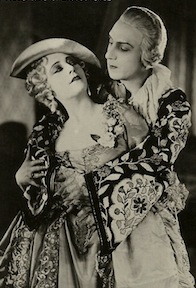
For the magnetic Ivan Mosjoukine, the swashbuckling Venetian seducer proved the role of a lifetime—he duels, jumps, climbs, and swaggers his way through countless assignations. A grand visual spectacle with all the technical perfection, sumptuous décor, and grotesquely over-the-top attire that the Russian émigré community could muster, the film is also a tongue-in-cheek comedy with Mosjoukine mocking jealous husbands and terrorizing creditors. (Alexandre Volkoff, 1926, 35 mm, 133 minutes)
To read more, please view the series page